
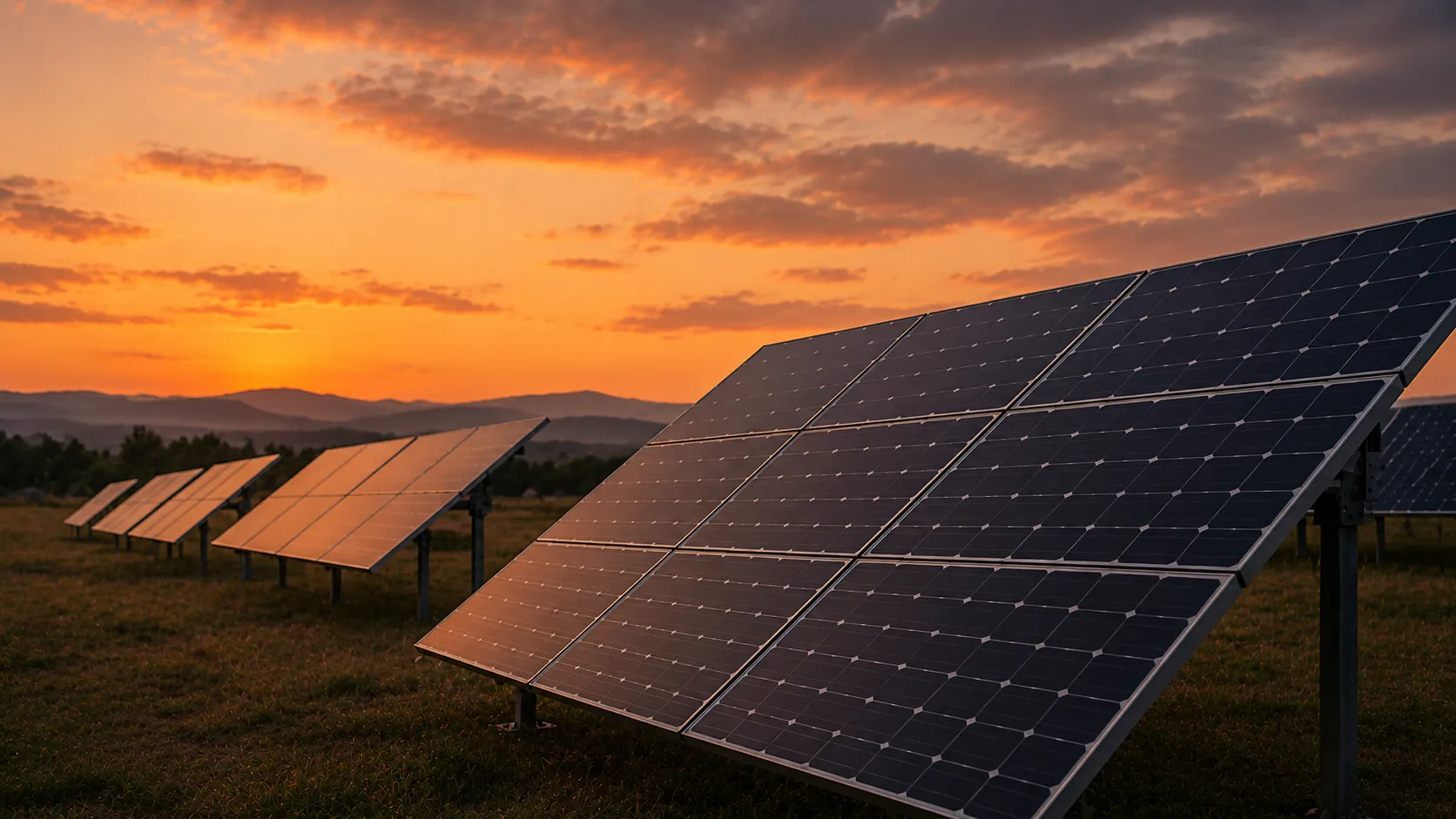
How Solar Panels Actually Generate Power
Solar panels work through a process called the photovoltaic effect. Each panel contains dozens of silicon cells that release electrons when struck by photons from sunlight. That electron movement is direct current (DC) electricity — the same principle that powers a battery.
Because your home runs on alternating current (AC), an inverter converts the DC output before it reaches your outlets. Any electricity your panels produce beyond what you're currently using flows out to the grid through your utility meter — and most states credit you for that export through net metering programs.
What a Complete Solar System Includes
- Solar panels: Typically 370–450 watts each in 2026. Most homes need 15–25 panels for full coverage.
- Inverter: Converts DC to AC. String inverters handle the whole array; microinverters work panel by panel and handle shading better.
- Mounting hardware: Racking systems secure panels to your roof with weatherproof flashing to prevent leaks.
- Bidirectional meter: Tracks both what you pull from the grid and what you send back — essential for net metering credits.
- Monitoring app: Real-time production data from your phone. Most systems include this at no extra cost.
The U.S. Department of Energy publishes a homeowner's guide to going solar that covers interconnection requirements and utility approval timelines if you want the official technical detail.
Is Solar Worth It in 2026?
For most American homeowners: yes. The combination of still-available state incentives, rising utility rates, and panel prices that have dropped roughly 90% over the last 15 years makes solar a strong financial move — especially if you're planning to stay in your home for 7+ years.
What you can realistically expect from a properly sized system:
- Monthly electricity bill reductions of 60–90%
- Payback period of 7–12 years (shorter in high-rate states like California, Massachusetts, and Connecticut)
- 25–30 years of reduced or eliminated electricity costs after payback
- Home value increase of $15,000–$25,000 on average
- A hedge against utility rate increases, which have averaged 3–4% annually for the past decade
The Four Factors That Determine Your ROI
Not every home has the same solar potential. These four variables have the biggest impact on how quickly your system pays for itself:
- Your electricity rate: Homeowners in high-rate states see the fastest payback. At $0.34/kWh (Massachusetts average), each kWh you produce is worth more than at $0.11/kWh (Louisiana average).
- Peak sun hours in your location: Arizona averages 6.5 hours of peak sun daily; Maine averages around 4.2. More sun means more production — but high electricity rates can compensate for lower sun hours.
- Roof orientation and shading: South-facing at 30–45 degrees is optimal. East-west splits work well too, often producing 85–90% of a south-facing setup's output. Shade from trees or chimneys is the biggest performance killer.
- State and local incentives: Property tax exemptions, sales tax exemptions, utility rebates, and net metering policies vary significantly by state. See our state-by-state guide for specifics.
Use our Solar Savings Calculator to get an estimate based on your actual location and monthly bill — it takes about 60 seconds.
How Many Solar Panels Does Your Home Need?
The US average home consumes about 10,500 kWh per year. A 400-watt panel in a location with average sun (4.5 peak sun hours/day) produces roughly 650 kWh annually. That works out to approximately 16–17 panels for full offset — but your actual number depends on your specific usage and location.
Here's a rough sizing guide by monthly electric bill:
Planning to add an EV? A typical electric vehicle adds 3,000–4,500 kWh of annual consumption — roughly 5–7 extra panels. Sizing for this upfront costs far less than expanding your system later.
Solar Tax Credits & Incentives in 2026
The federal Investment Tax Credit (Section 25D) expired December 31, 2025 under the One Big Beautiful Bill Act. New installations in 2026 no longer qualify for the 30% federal credit.
However, state-level incentives remain available in many states and can still significantly reduce your net cost:
- State income tax credits: Hawaii (35%), New York ($5,000 cap), Massachusetts ($1,000), Arizona ($1,000)
- Property tax exemptions: Available in 36+ states — your home value increases from solar, but your property tax doesn't
- Sales tax exemptions: 25+ states exempt solar equipment from state sales tax
- Net metering: Credits you for excess electricity exported to the grid — policies vary significantly by utility
- Utility rebates: Some utilities offer direct rebates of $250–$1,000 per kW installed
See our full 2026 Solar Incentives Guide and State-by-State Solar Guide for what's available in your specific location. The DSIRE database also tracks every available program by zip code.
Should You Add a Battery to Your Solar System?
A solar-only system covers your daytime electricity needs and exports excess production to the grid. Add a battery and you store that excess locally — using it at night, during peak-rate hours, or when the grid goes down.
Battery storage makes strong financial sense if any of these apply:
- Your utility uses time-of-use (TOU) pricing — rates that spike in the evening when solar isn't producing
- Your area has an unfavorable net metering policy that pays less than retail rate for exports
- You experience frequent power outages and want backup capability
- You're in a state with battery-specific rebates (California's SGIP program, New York's Con Edison battery incentives, etc.)
Current installed costs for a 13.5 kWh system run $9,500–$12,000. State incentives can cut this significantly in eligible states. Use our Battery Sizing Calculator to find the right capacity for your home.
How to Go Solar: A Step-by-Step Plan
Solar Panel FAQs
Do solar panels work on cloudy days or in winter?
Yes, panels produce electricity year-round. On overcast days they typically generate 15–30% of their rated output — they need light, not direct sunshine. Germany, one of the cloudiest countries in Europe, is a top 10 global solar market. In snowy climates, panels shed snow quickly due to their smooth glass surface and tilt angle. Winter sun hours are lower, but your system's annual production accounts for seasonal variation.
How long do solar panels actually last?
Most premium panels carry 25-year production warranties guaranteeing at least 85% of rated output at year 25. Real-world degradation averages 0.5% per year — meaning after 25 years, a panel rated at 400W is still producing around 350W. Inverters have shorter lifespans (10–15 years) and are typically the first component that needs replacement. Budget $1,000–$2,500 for an inverter replacement over the system's life.
What maintenance do solar panels require?
Very little. Rain clears most dust and debris in most climates. In arid regions or under trees, a garden hose rinse once or twice a year is sufficient. The main thing to do monthly is check your monitoring app to confirm production is consistent. If output drops unexpectedly, that's your signal to call your installer. There are no moving parts and nothing to lubricate or tune.
What happens to solar panels during a power outage?
Grid-tied solar systems automatically shut down during outages — this is required by law to protect utility workers repairing lines. Your panels are producing electricity but your home won't have power. Adding a battery storage system with islanding capability solves this — the battery disconnects from the grid and powers your home independently during outages. See our Battery Basics Guide for how this works.
Do solar panels add to my home's value?
Yes. Research from Lawrence Berkeley National Laboratory found solar adds an average of $4 per watt to home sale prices — roughly $15,000–$25,000 for a typical system. Zillow data shows homes with solar sell 4.1% faster than comparable homes without it. In most states, this value increase is exempt from property tax reassessment.
How much roof space does a solar system require?
Each panel takes up roughly 17–20 square feet. A 6 kW system with 15 panels needs approximately 270–300 square feet of usable south-facing roof. East and west-facing areas work too — typically at 85–90% of south-facing efficiency. Shade from trees, chimneys, or HVAC equipment significantly reduces output and should be evaluated during site assessment.
Ready to calculate your personalized solar savings?
Run My Solar Estimate →